
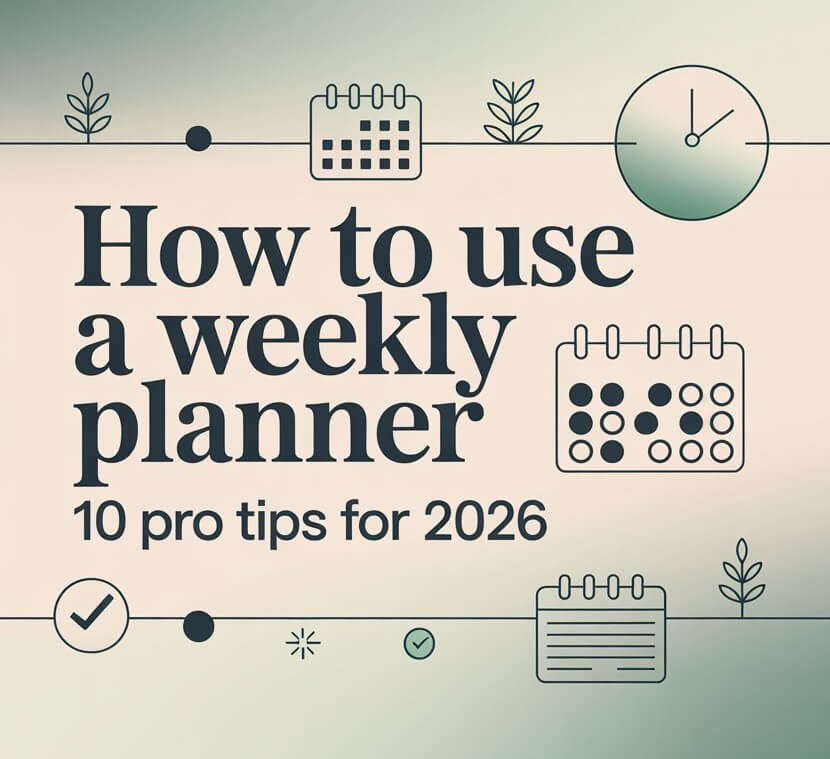
Want to know how to use a weekly planner effectively but not sure where to start? You’re not alone! Most people buy a beautiful planner, use it for a week, then abandon it. The secret to weekly planning success isn’t the planner itself — it’s how you use it. In this guide, you’ll discover 10 pro tips on how to use a weekly planner to organize your tasks, boost productivity, and finally achieve your goals in 2026.
Why Learning How to Use a Weekly Planner Matters
Before diving into the tips, let’s understand why mastering how to use a weekly planner can transform your life. According to research from the American Psychological Association, effective planning reduces stress, increases productivity, and improves mental clarity.
A weekly planner isn’t just a notebook — it’s your personal command center for success. When used correctly, it helps you:
- 🎯 Clarify priorities – Focus on what truly matters
- ⏰ Manage time better – Allocate hours wisely
- 📊 Track progress – See your wins and patterns
- 🧘 Reduce stress – Stop relying on memory
- 💪 Build consistency – Create daily habits
10 Pro Tips on How to Use a Weekly Planner Effectively
1. 🗓️ Plan Your Week Every Sunday Evening
The first rule of how to use a weekly planner effectively is to set a dedicated planning session. Every Sunday evening, spend 20-30 minutes reviewing the upcoming week.
Look at appointments, deadlines, family events, and personal goals. This Sunday ritual sets the tone for a productive, stress-free week ahead.
2. 🎯 Start with Top 3 Priorities
Don’t overwhelm your planner with 50 tasks. Instead, identify your Top 3 Priorities for the week. These are non-negotiable tasks that move you closer to your goals.
When you focus on 3 key priorities, you actually accomplish them — instead of feeling guilty about an endless to-do list.
3. ⏰ Time-Block Your Days
One of the most powerful tips for how to use a weekly planner is time-blocking. Instead of writing “Work on project,” assign specific hours like “9:00-11:00 AM: Project work.”
Time-blocking eliminates decision fatigue and helps you stay focused on one task at a time.
4. 📊 Add a Habit Tracker
Habits shape your life. Include a simple habit tracker in your weekly planner to monitor daily routines like drinking water, exercising, reading, or meditating.
Checking off boxes daily builds momentum and creates lasting positive change.
5. 😊 Track Your Mood and Energy
Most planners ignore an important factor: your emotional state. Add a mood tracker to your weekly planner to identify patterns. You might discover Mondays drain you while Thursdays energize you.
This self-awareness helps you schedule demanding tasks on high-energy days.
6. ✏️ Use Pencil First, Then Pen
Plans change. Life happens. When learning how to use a weekly planner, write in pencil first so you can erase and adjust without your planner looking messy.
Once tasks are confirmed, you can rewrite them in pen for permanence.
7. 🎨 Color-Code by Category
Assign colors to different life areas:
- 🔵 Blue – Work tasks
- 🟢 Green – Health & exercise
- 🟣 Purple – Family time
- 🟡 Yellow – Personal projects
- 🔴 Red – Urgent deadlines
Color-coding gives you a visual snapshot of how balanced your week is.
8. 📓 Include a Brain Dump Section
Your mind constantly generates ideas, worries, and reminders. Use a “Brain Dump” section in your weekly planner to capture everything floating in your head.
This simple practice reduces mental clutter and helps you focus on the present.
9. 🔄 Review and Reflect on Sundays
Don’t just plan — reflect. Before starting a new week, review the previous one:
- ✅ What did I accomplish?
- ❌ What didn’t I finish? Why?
- 💡 What did I learn?
- 🚀 How can I improve next week?
Weekly reviews are the secret weapon of high achievers.
10. 📥 Download a Free Weekly Planner Printable
The best way to master how to use a weekly planner is to start with a quality template. Skip expensive store-bought planners and try our FREE Weekly Planner Printable PDF (A4) — 50 minimalist pages with habit tracker, mood tracker, and priorities section already included!
🎁 Get Your FREE Weekly Planner Printable
Ready to apply these tips? Download our FREE Minimalist Weekly Planner PDF — designed with everything you need to plan effectively!
📥 Download FREE Weekly Planner PDF
Common Mistakes to Avoid When Using a Weekly Planner
Now that you know how to use a weekly planner effectively, avoid these common pitfalls:
- ❌ Over-scheduling – Leave buffer time for unexpected tasks
- ❌ Skipping daily reviews – Check your planner every morning
- ❌ Perfectionism – Done is better than perfect
- ❌ No flexibility – Adjust plans when life happens
- ❌ Ignoring self-care – Schedule breaks and rest
- ❌ Comparing to others – Your planner reflects your unique life
How to Build a Weekly Planning Habit
Mastering how to use a weekly planner takes consistency. Follow these steps to build the habit:
- Week 1-2: Just open your planner daily, even for 2 minutes
- Week 3-4: Add basic tasks and Sunday planning sessions
- Week 5-6: Introduce habit trackers and mood tracking
- Week 7-8: Implement time-blocking and color-coding
- Week 9+: Full system mastery and weekly reviews
Best Tools to Complement Your Weekly Planner
Combine your weekly planner with these productivity tools:
- 📱 Google Calendar – For appointments and reminders
- ✅ Todoist or Notion – For digital task management
- ⏱️ Pomodoro Timer – For focused work sessions
- 📓 Dot Grid Notebook – For brainstorming and notes
- 📒 Bullet Journal Layouts – For creative planning
FAQ About How to Use a Weekly Planner
- How do I start using a weekly planner effectively? Start by planning every Sunday evening, identifying your top 3 priorities, and using time-blocking to schedule your tasks.
- Should I use a digital or paper weekly planner? Paper planners improve memory and reduce screen time, while digital ones offer reminders. Many people use both for different purposes.
- How long does it take to build a weekly planning habit? Most people develop a consistent weekly planning habit in 4-8 weeks with daily practice.
- What should I include in my weekly planner? Include top 3 priorities, daily tasks, appointments, habit tracker, mood tracker, and a brain dump section.
- Can I use a weekly planner for personal goals? Absolutely! Weekly planners work great for fitness, financial, learning, and personal development goals.
More Helpful Guides
- ⭐ Free Weekly Planner Printable PDF (A4) – 50 Pages
- 15 Best Bullet Journal Layouts for Beginners (2026)
- How to Use a Dot Grid Notebook: 10 Creative Ideas
- Free Dot Grid Notebook Printable (A4 PDF) – 40 Pages
- Browse all Free Printable Notebooks
More pages: Contact Us | Privacy Policy